 Bulgaria
  Greece
  Turkey
  Romania
  Serbia
  N. Macedonia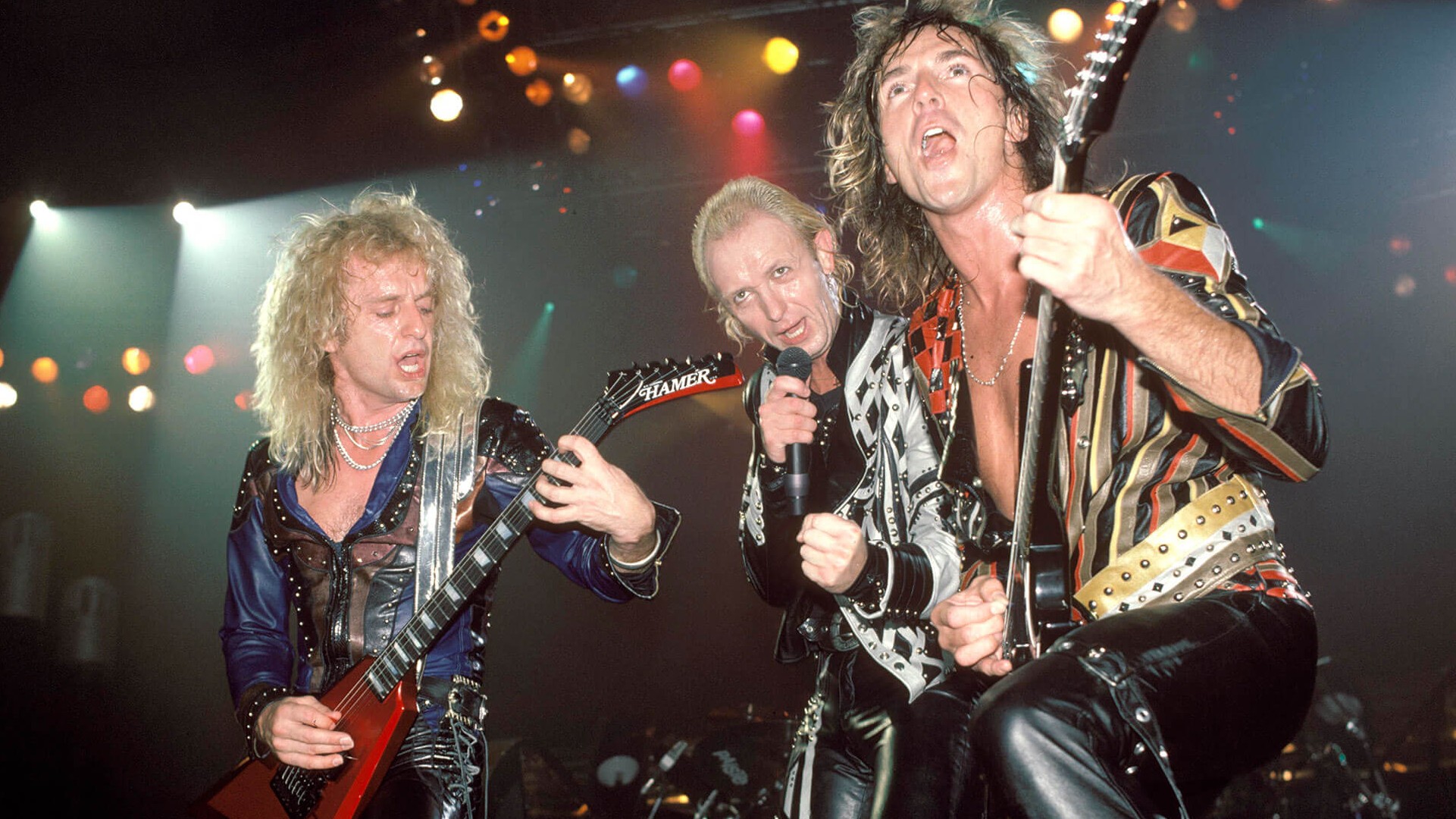
If the PMRC and "Filthy Fifteen" story is a battle over what children have the right to listen to, the case against Judas Priest is something far more serious.
This time it isn't about indecent words. It isn't about sex. It isn't even about satanism.
It's about two human tragedies, and an attempt to prove in a courtroom that a rock band had planted hidden messages in its music that drove two young men to attempt to take their own lives.
In the defendant's seat sat Judas Priest — one of the most influential heavy metal bands in history. And at the center of the accusation stood one song: "Better by You, Better Than Me." And one alleged message: "Do it."
According to the prosecution, this was no accidental combination of sounds. It was a hidden message aimed at the subconscious. And that is exactly what the court had to determine.
December 23, 1985
Raymond Belknap and James Vance were two young men from Sparks, Nevada. Belknap was 18, Vance was 20.
For hours the two listened to music, drank beer, and smoked marijuana. Among the music was Judas Priest's 1978 album, "Stained Class."
Afterwards, the two went to a church playground. They brought a shotgun with them. They made a suicide pact of sorts. Belknap fired first and died instantly. Vance also shot himself but survived — severely injured and disfigured. He later died in 1988 from complications related to his injuries.
This is a tragedy heavy enough on its own. But the families sought an explanation. And gradually their attention turned to the music the two had listened to before the shooting.
Why Judas Priest specifically?
Here we need to return to the atmosphere of the '80s. Heavy metal was already under enormous public pressure. The PMRC was campaigning against "dangerous" lyrics. The media talked about satanism. Parents' organizations warned about hidden messages. Claims emerged that music could contain secret messages a person doesn't consciously perceive.
And Judas Priest was almost the ideal band for suspicion to fall on. Leather. Studs. Motorcycles. Dark aesthetics. Aggressive heavy metal. And a frontman like Rob Halford, who became one of metal's most recognizable images.
For someone already convinced heavy metal was dangerous, Judas Priest looked like an obvious suspect. But there was one problem: it had to be proven.
"Stained Class"
The album at the center of the case was 1978's "Stained Class" — Judas Priest's fourth studio album. And one song in particular became the main object of the accusation: "Better by You, Better Than Me."
The song was actually not written by Judas Priest — it's a cover of a composition by British progressive rock band Spooky Tooth. Judas Priest recorded it for "Stained Class" as a last-minute addition to the record, at the insistence of CBS Records, who wanted a more commercial track on an otherwise dark album.
According to the plaintiffs, the hidden message "Do it" could be heard within it. But the context is even more sinister — prosecution experts claimed other alleged hidden phrases related to suicide could also be found, among them claims like "try suicide." It was claimed that when the song was processed or played back in a certain way, various hidden messages could be heard.
🎥 Judas Priest — Better by You, Better Than Me (Official Audio)
What does "subliminal message" mean?
A subliminal message is information that, according to the theory, lies below the threshold of conscious perception. A person doesn't normally register it, but it supposedly reaches the subconscious and can influence behavior.
Throughout the 20th century there were numerous experiments and claims about such effects. In popular culture, the idea became especially famous: "If you play the song backwards, you'll hear a hidden message." And this is where so-called backmasking comes in — a recording that, played in reverse, appears to form words or phrases.
In rock music, this had already been used as an artistic device. But in the case against Judas Priest, the question was entirely different: can such sounds actually drive a person to suicide?
The accusation
The families of Belknap and Vance filed a lawsuit against Judas Priest and record label CBS Records. The claim sought millions of dollars. The theory went roughly as follows: the young men listened to "Stained Class"; the song contains a hidden message; it reached their subconscious; the message pushed them toward suicide; therefore the band and the label bore responsibility for the tragedy.
This is an extremely serious accusation, because if accepted, the consequences for the music industry could have been enormous.
But how do you prove what someone hears?
This turned out to be one of the most fascinating problems of the entire trial. The song was played. Then played backwards. Sped up. Slowed down. The volume was altered. Audio technology was used. And experts pointed to sound combinations they claimed resembled certain words.
One of the prosecution's witnesses, William Nickloff, claimed that "Do it" could be heard several times in "Better by You, Better Than Me."
And here an incredible psychological problem arises. If someone tells you in advance: "Now you'll hear a voice saying 'Do it,'" your brain starts hunting for exactly that phrase. And suddenly you start hearing it. This is a classic example of how the human brain finds meaning in ambiguous sounds.
The courtroom starts to resemble a recording studio
In July 1990, something almost surreal happened in the courtroom. Judas Priest's music was played. Forward. Backward. At different speeds. With altered volume. Judge Jerry Whitehead listened. The lawyers listened. The experts listened. Everyone tried to determine whether, buried in the noise of guitars, drums, and Rob Halford's vocals, there really was a hidden message.
One prosecution expert claimed "Do it" could be heard at least seven times in the song. Judas Priest member Glenn Tipton, however, explained that the alleged "Do it" was simply a combination of a vocal exhale and an instrumental sound.
And this matters, because if the sound arises accidentally from the combination of voice, guitar, and recording, it's no longer a hidden message. It's an acoustic coincidence.
Judas Priest's defense
The band categorically denied the accusation. No one in Judas Priest had recorded a message telling anyone to kill themselves. No lyrics. No instruction. No intent. No motive.
The band's lawyers also attacked the very idea that the alleged sounds could have such an effect. One of the defense's key experts was Stanford psychiatrist Dr. Donald Lunde. He stated that suicide is not an act that can simply be "commanded" by the subconscious through this kind of subliminal message. In his view, real psychological and social causes must be sought behind such tragedies.
So what's the problem with "Do it"?
This is perhaps the strongest point against the accusation. Even if we accept that someone can hear "Do it," that just means "Do it." But do what? There's no "kill yourself." No specific instruction. No evidence even that the two young men perceived the words as a command to commit suicide.
And another thing: if such a message were truly that powerful, why did millions of people listen to the same song without committing suicide?
Rob Halford takes the stand
One of the most surreal moments was Rob Halford's testimony. Judas Priest's frontman had to explain to the judge whether the band had planted hidden messages in its recordings. Halford categorically denied it.
He did admit something interesting, though: on another album, the band had indeed used backward recording as an artistic experiment. This is an important distinction — using backmasking as an artistic effect is not the same as embedding a secret command in the music. Halford explained he had never recorded his vocals so that, played in reverse, they would produce "try suicide" or a similar phrase.
The trial dragged on for weeks. Judas Priest's music became evidentiary material. People listened to the songs backwards. Experts argued over what could be heard. At one point, Halford himself had to demonstrate how he sang — almost theatrical. He later described how surreal the whole experience was. For the band, it was an absurd situation: having to prove in a courtroom that they hadn't recorded a secret command to commit suicide.
And there's another interesting twist
A prosecution witness presented, as evidence, alleged phrases that, played in reverse, sounded like blasphemous messages. But the defense attacked the credibility of these claims. In one instance, a witness claimed a blasphemous phrase could be heard when "White Heat, Red Hot" was played backwards. Representatives of Judas Priest and CBS called this an illusion, insisting such sonic coincidences can be found almost anywhere if a person already knows what they're supposed to hear.
This is the core problem with the entire method. If I give you random noise and tell you: "It says 'Satan is coming' here," your brain can start assembling exactly that phrase out of the sounds.
🎥 Judas Priest — White Heat, Red Hot (Official Audio)
Does it matter that the two had been listening to Judas Priest?
Of course. But that doesn't prove a causal link. The two were under the influence of alcohol and marijuana. They had personal and social problems. There is evidence of a complex family and psychological environment.
The mere fact that someone listened to a certain kind of music before a suicide doesn't prove the music caused it. That's a huge difference. Imagine: a person watches a film before committing a crime. Does that automatically mean the film made them do it? Of course not. Causation has to be proven. That is exactly what the prosecution failed to do.
August 24, 1990
After roughly a six-week trial, Judge Jerry Whitehead delivered his verdict. Judas Priest were acquitted on the merits. The judge dismissed the claim.
The families failed to prove that the band had deliberately embedded subliminal messages in its music. Nor did they prove that any alleged message caused the suicide. The judge ruled that the supposed "Do it" was the result of a combination of sounds — a vocal exhale and a guitar sound.
This was a huge victory for Judas Priest. But the story doesn't fully end there.
CBS Records is fined
Here's an important detail that's often left out. The judge imposed a $40,000 fine on CBS Records over issues with producing the original master recordings requested during the case.
This does not mean CBS was found guilty of the suicide. The fine was over a separate procedural matter. But it's often misused as an argument along the lines of "Judas Priest was found guilty." No. They weren't. The band was cleared of responsibility.
So why does the case remain so important?
Because Judas Priest actually won the case, but didn't fully win the war. The trial left behind an enormous public footprint. For the first time on such a scale, a courtroom debated whether rock music could contain subconscious commands capable of altering a listener's behavior.
And that created a dangerous precedent. Had the court ruled the other way, the consequences could have been enormous: a song about suicide → someone commits suicide → the family sues the band. Next case: a song about violence → someone commits murder. Next: a song about drugs → someone dies of an overdose. Where does a musician's responsibility end?
Rob Halford doesn't fully celebrate
After the verdict, Halford called the outcome a victory for Judas Priest, heavy metal, and artistic expression. But he also expressed concern that the ruling might leave the door open for future claims about subliminal messages.
This is a very telling reaction, because he understood: today we won, but tomorrow someone else could end up in the exact same position.
And what happened to Judas Priest?
The band didn't disappear. Wasn't banned. Wasn't convicted. Didn't lose the right to record music. But the trial had a cost — the tour was disrupted, a lot of time and money was lost, the musicians had to deal with lawyers, experts, and court hearings instead of music. And most importantly: the name Judas Priest remained forever linked to "the subliminal messages case."
Is there real evidence of "Do it" in the song?
Here we need to be very precise. Sound combinations that some people interpret as "Do it" can indeed be heard in the recording. But the court did not accept that this was a deliberately planted message — it ruled it was an accidental combination of sounds.
That's the crucial difference. Not: "There's no sound at all in the recording resembling 'Do it.'" But rather: "There's no evidence this was a deliberately recorded message." And even more importantly: there's no evidence such a sound caused the suicide.
Why is the subliminal messages story so convincing to people?
Because the human brain is a meaning-finding machine. We hear noise — the brain searches for words. We see a cloud — we see a face. We hear random sounds — we hear a name. This phenomenon is called pareidolia.
And reversed recordings are the perfect environment for it. When a person already knows what they're supposed to hear, the likelihood they'll "hear" it increases. If 100 people listen to the same noise with no prior information, they might hear 100 different things. But if you tell them: "It says 'Do it' here," many of them start hearing exactly "Do it."
The greatest irony
Judas Priest never needed hidden messages. If the band wants to provoke, it does so openly. If it wants to be aggressive — it's aggressive. If it wants to use dark imagery — it uses it. Heavy metal isn't music that typically whispers secret commands in your ear. It screams. That's exactly its nature.
And what did society learn?
Here the Judas Priest story connects directly to the PMRC. In both cases, we see the same pattern: first anxiety appears, then a culprit is found, then evidence is sought, and finally it turns out the evidence is far more complicated than the original story.
With the PMRC: "This music will corrupt children." With Judas Priest: "This music will make children kill themselves." In both cases, music becomes a convenient object onto which society can offload complex problems. But a work of art cannot automatically explain the behavior of the person listening to it.
This doesn't mean music has no influence
Here we need to be honest. Music does have influence. It can change your mood. It can intensify emotion. It can shape identity. It can influence language, fashion, behavior, and the way a young person sees the world.
But there's an enormous scientific and logical gap between that and the claim "This song made him kill himself." Especially when dealing with complex human tragedies.
What remains after the trial?
Several very important lessons remain:
First: We shouldn't confuse correlation with causation. The fact that two people listened to Judas Priest before a tragedy doesn't prove Judas Priest caused it.
Second: We shouldn't treat every interpretation of random noise as an intentional message.
Third: Context matters — we need to consider mental state, family environment, drugs, alcohol, social factors, and all other circumstances.
Fourth: Art shouldn't be judged solely by what someone claims to hear in it played backwards.
Fifth: Moral panic can create a culprit before evidence has even been found.
Judas Priest wins the trial. But heavy metal is already different
In 1990, Judas Priest walked out of the courtroom without a verdict against them. But heavy metal had already endured five years of relentless attacks: the PMRC, the "Filthy Fifteen," the Satanic Panic, hidden messages, suicides, drugs, violence, sex. All of it blended into one enormous culture war. And Judas Priest became one of the symbols of that war.
The ironic finale
Years later, no serious person points to the Judas Priest trial as proof that "Better by You, Better Than Me" can make people kill themselves. But the case remains. It's been turned into documentaries. Into books. Into journalistic investigations. Into university discussions. And above all — into a lesson in how easily society can reach for a simple explanation for a complex tragedy.
Judas Priest was not convicted. "Do it" was not proven to be an intentional message. It was not proven that the music caused the suicides. The court concluded the alleged sound was the result of an accidental combination of a vocal exhale and a guitar sound.
But there is one final, deeply sad and human side to this story. Two young men are genuinely dead. Their families genuinely lost their children. And that shouldn't become an excuse to simply mock the parents. They were probably desperately searching for an answer to the question "Why?" — and found a possible answer in the place it was easiest to see it: the music.
The problem is that tragedy rarely has only one cause. And even more rarely can that cause be discovered by playing a song backwards.
From the "Filthy Fifteen" to the courtroom
The story of the PMRC and the Judas Priest trial are, in truth, two chapters of the same story. In 1985, the claim was: "This music is dangerous for children." By 1990, the question had become: "Can this music kill?" And in both cases, the answer turned out to be far more complicated.
We may not like a particular song. We may find its lyrics vulgar. We may dislike satanic imagery. We may find certain videos too aggressive. A parent has every right to tell their child: "I don't want you listening to this."
But there's an enormous difference between that and the claim: "The state must ban this." And an even bigger one between "I don't like this music" and "This music is to blame for the tragedy."
That exact difference is where the real lesson of the Judas Priest trial lies. And perhaps the most important legacy of this case has nothing to do with Judas Priest at all. It's a warning to all of us: when tragedy strikes, the human brain desperately searches for someone to blame. Sometimes the culprit is real. Sometimes there are dozens of causes. And sometimes we simply hear words in the noise because someone told us in advance that words were supposed to be there.
And if the Judas Priest story teaches us anything, it's exactly this: before blaming the music, you have to prove the cause. It's not enough to simply hear "Do it."