
 Bulgaria
  Greece
  Turkey
  Romania
  Serbia
  N. Macedonia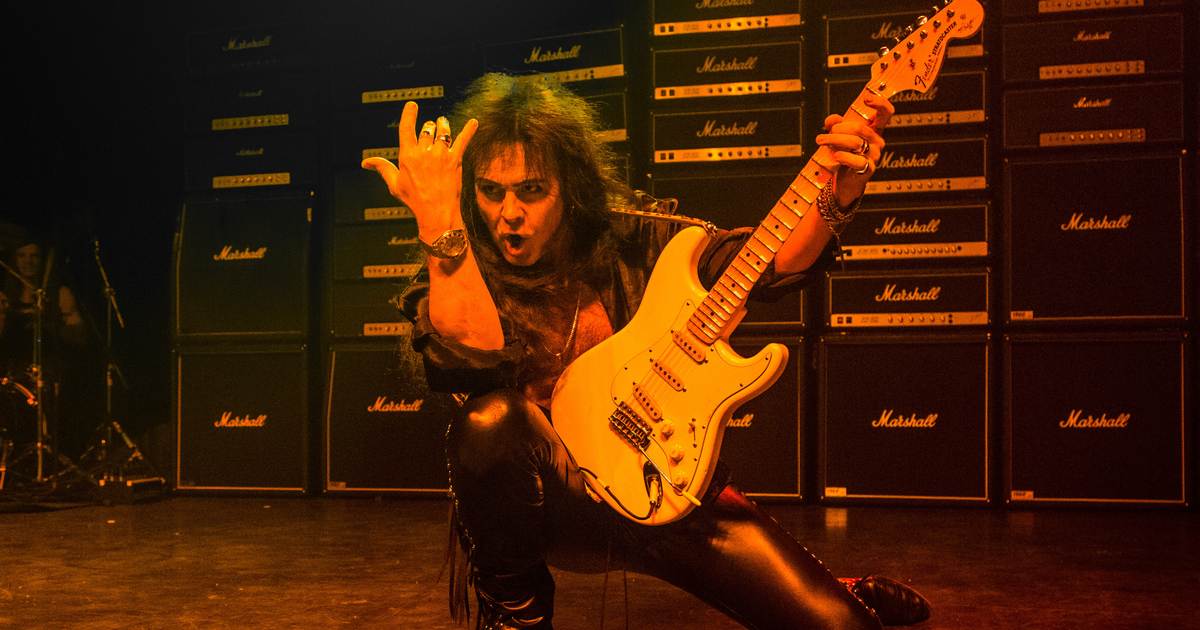
When the young Swede Yngwie Malmsteen appeared on the scene in the first half of the 1980s, the world of guitar experienced a genuine shock. Until then, speed was already an important part of hard rock and heavy metal, but no one played the way he did.
Malmsteen didn't just play fast. He transferred the thinking of classical composers from the Baroque era onto the electric guitar. In his music, the influence of Johann Sebastian Bach, Niccolò Paganini, Antonio Vivaldi, and other great authors is clearly felt. As early as the album Rising Force (1984), he laid the foundations of neoclassical metal and inspired an entire generation of guitarists.
His style is a unique combination of classical music, baroque, romanticism, blues, hard rock, and heavy metal. Although often perceived only as 'the fastest guitarist,' his true strength lies in the way he builds his melodies – he thinks like a classical composer, and his solos contain themes, variations, development, and climax.
His tone is immediately recognizable – bright, clear, full, strongly saturated with mid-frequencies, and relatively clean despite the high gain. His main equipment over the years includes a Fender Stratocaster with a scalloped fretboard, DiMarzio pickups, Marshall amplifiers, and a minimal amount of effects. The scalloped fretboard is one of his trademarks – the wood between the frets is carved out so that the fingers almost don't touch the fretboard, allowing very precise control over vibrato and string bending, but requiring exceptional technique.
String bending is one of his strongest qualities, although he is often discussed only for his speed – it is very precise, powerful, with excellent intonation, and strongly influenced by the blues, which is one reason his solos don't sound mechanical.
His vibrato is described by many specialists as one of the best in rock music – wide, very fast, extremely controlled, strongly resembling the vibrato of classical violinists. Just one sustained note with his vibrato is enough to be recognized.
In alternate picking, Malmsteen reaches near perfection – extremely economical, incredibly fast, and absolutely synchronized with the left hand; this is where much of his speed lies. He popularized sweep picking long before the technique became mainstream – his arpeggios sound smooth, even, almost like a violin performance, and he uses them as a musical language, not as a demonstration.
This side of Malmsteen often remains overshadowed by his virtuosic solos, but he creates excellent riffs built on classical harmonies, minor sequences, and dramatic chords – particularly impressive are Rising Force, I'll See the Light Tonight, and Far Beyond the Sun.
In soloing and phrasing, Malmsteen reaches one of the highest levels in the history of rock guitar. His solos contain arpeggios, sequences, classical motifs, blues bends, and dramatic pauses – despite the enormous speed, he rarely loses the logic of the musical phrase, and his best performances never sound like mechanical exercises.
Live, he is an impressive improviser – although he uses his characteristic musical vocabulary, he often changes his solos and adds new ideas, and his improvisations remain technically exceptionally complex but retain his characteristic melodiousness.
Malmsteen is one of the creators of neoclassical metal. Albums like Rising Force, Marching Out, Trilogy, and Odyssey became textbooks for generations of guitarists, proving that heavy music can successfully use ideas from classical composition without losing its energy.
For objectivity – sometimes Malmsteen uses similar musical devices in different compositions, and some critics believe that excessive virtuosity sometimes overshadows emotion. He rarely leaves his well-known style, but it is precisely this consistency that makes his sound so easily recognizable.
Yngwie Malmsteen is one of the few guitarists who created an entire new school in rock music. After his appearance, the technique of the electric guitar was no longer measured only by speed but by the ability to combine virtuosity, musical thought, and classical discipline. Without him, the development of neoclassical metal would likely have looked completely different.