 Bulgaria
  Greece
  Turkey
  Romania
  Serbia
  N. Macedonia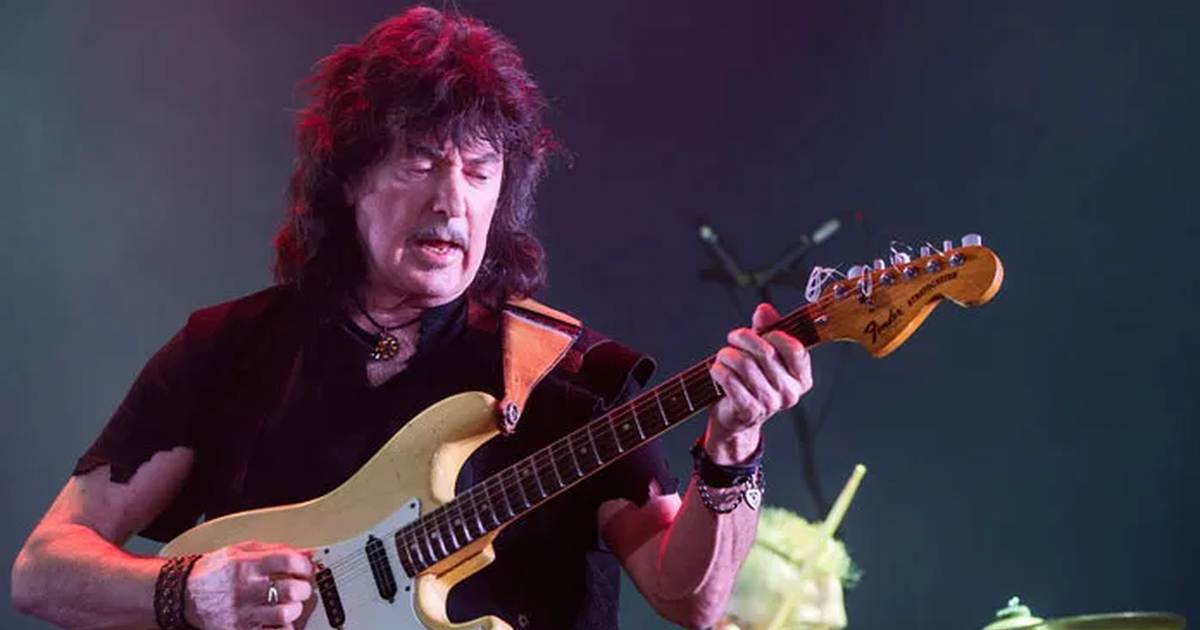
On August 12, 2026, something incredible happened – Ritchie Blackmore was back on stage with Deep Purple! After a 33-year hiatus, the legendary guitarist returned to perform the iconic “Smoke on the Water” together with Ian Gillan. 15,000 people at Jones Beach Theater in New York erupted in ecstasy! Blackmore, at 81 years old, proved he hadn’t lost his magic. Smiles, hugs, tears, and an unforgettable evening that will go down in history. Ha ha! I liked this comment: “What won’t a person do to get into a Deep Purple concert without a ticket.”
Ritchie Blackmore is one of the most influential guitarists in rock history. Best known as the founder and guitarist of Deep Purple, and later as the leader of Rainbow, he created a style that combined the aggression of rock with the discipline and drama of classical music.
If Jimi Hendrix is the symbol of freedom and experimentation, then Ritchie Blackmore is the symbol of control, precision, and compositional thinking. His influence is felt across generations of guitarists – from Yngwie Malmsteen and Joe Satriani to many heavy metal musicians who adopted the idea of combining rock guitar with classical harmonies.
His style is a unique combination of blues foundation, classical music, baroque melodies, aggressive rock, and dramatic phrasing. He is not a guitarist who plays many notes without reason – with him, almost every phrase has a purpose. Blackmore is known for his strictness, being extremely demanding of himself and the musicians around him. This sometimes made him a difficult partner, but the same perfectionism created some of the greatest riffs and solos in rock history.
His tone is one of the most recognizable in hard rock – sharp, bright, aggressive, slightly 'cutting,' with many mid-frequencies and a distinctly clear attack. Unlike the later heavy metal sound, Blackmore does not seek a huge wall of distortion. His sound is more like a strongly played classical violin through an amplifier.
The main elements of his sound are the Fender Stratocaster, Marshall amplifiers, strong control over pick attack, use of the middle pickup positions, and specific amplifier settings. Interestingly, Blackmore often uses a softer tone than it appears – the aggression comes not only from the equipment but from the way he strikes the strings.
String bending in Blackmore's playing is not as demonstrative as with David Gilmour or Gary Moore – for him, it is more of a tool for drama. His bends are precise, controlled, often used for tension before the resolution of the melody. He uses the guitar almost like a violin – every change in pitch has musical meaning.
His vibrato is one of his most characteristic qualities – fast, controlled, slightly nervous, filled with tension. For Blackmore, vibrato is not ornamentation but part of the note itself; a long note with his vibrato immediately reveals who is playing.
His pick attack is one of his greatest trademarks – a strong attack, precise alternate picking, sometimes with a slightly 'scraping' feel. This is precisely what allows him to create that dramatic and aggressive sound.
Perhaps his most important feature is the classical influences. Blackmore introduced into hard rock minor classical scales, arpeggios, baroque motifs, and melodic lines reminiscent of Bach and other classical composers. This later became the foundation of neoclassical metal – Yngwie Malmsteen is often cited as the one who developed this style to an extreme, but without Blackmore, this path would likely not have been paved.
Rhythm guitar is a side of Blackmore that is sometimes underestimated. In Deep Purple, he created some of the greatest riffs in rock history – Smoke on the Water, Black Night, Burn, Space Truckin'. His riffs are simple on the surface, extremely memorable, and strongly influenced by classical harmony. He understood that a great riff is not the one with the most notes but the one that stays in the mind.
His solos are built like songs – with recurring motifs, development of musical ideas, dramatic pauses, and contrasts between fast and slow moments. Among his greatest solos are Highway Star, Child in Time, Burn, Stargazer, and Mistreated. Particularly Highway Star was revolutionary for its time – a combination of rock energy and classical virtuosity.
As an improviser, Blackmore is strong but different from Hendrix – Hendrix seeks the moment and experimentation, Blackmore seeks structure. Even when improvising, the feeling is that he thinks like a composer.
As a composer, he is among the greatest – he created riffs, melodies, and entire musical concepts. With Deep Purple and Rainbow, he left an enormous legacy, especially with the albums Machine Head (1972), Burn (1974), and Rising (1976), which are fundamental to rock music.
Like every great musician, Blackmore has limitations – he is not the guitarist with the greatest technical diversity and is not known for modern techniques like tapping, extreme speed, or complex virtuosic exercises. His style can seem repetitive because he uses many characteristic devices, but it is precisely these devices that make his sound a trademark.
Ritchie Blackmore is the man who proved that rock guitar can be simultaneously heavy, aggressive, and intelligent. He built a bridge between classical music and hard rock and laid the foundations for styles that would develop decades after him. If Jimi Hendrix is the man who liberated the electric guitar, then Ritchie Blackmore is the man who gave it architecture.